Friday, December 4, 2015

Check out this YouTube channel!

I found a really cool YouTube channel that kids might love! HopplaKidzLab's YouTube Channel is a great resource for many science experiments that students can do. This channel could really spark the curiosity for science among students.

Some of the experiments can be done at home with parent supervision. Some of them could be incorporated into the classroom. They have experiments that will work with kids of varying ages. It's definitely an interesting channel to subscribe to when you need some ideas of experiments that might be worthwhile to your students.

This is one of their most popular videos on their channel. It has over 4 million views. I watched the whole thing and got some great ideas. You all should watch it, too! They add new videos pretty often so they have quite a few new and exciting ones.

Enjoy!
Christina

Interesting Book

Hey all,

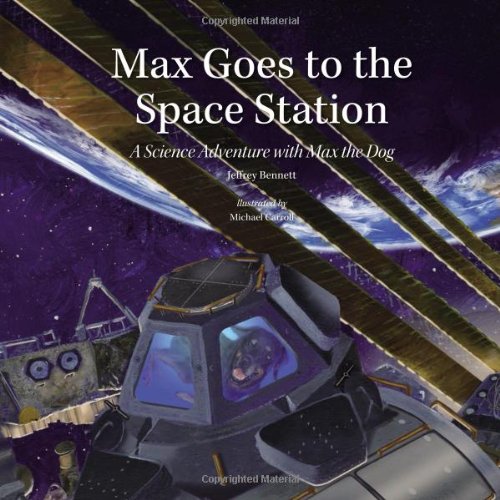
In class, we had to do an annotated bibliography over 25 children's books that could be used in the science classroom. One of my favorite books out of the one's that I chose was Max Goes to the Space Station: A Science Adventure with Max the Dog.
In this book, Max the dog is able to be an astronaut. He accompanies astronauts as they go into space, and his owners are able to watch his experiences and communicate with the astronauts on a live video camera.

I think it is a wonderful book to incorporate in the science classroom. Kids can relate to it because they'll either have a dog or some other pet that they'd imagine going into space, or they'll simply be interested in the idea of an animal going into space that they all might want to read the book on their own.

It gives an interesting perspective of things that happen in space. I truly enjoyed it as an adult, so I have faith that children in the science classroom will enjoy this book as well!

Science Fair Project

Each student in my class had to do a science fair project. We had to have a powerpoint, video, or tri-fold board to showcase our experiment. We were required to include a question, hypothesis, data, how we analyzed the data, our findings, and a conclusion.

I did my project on: Which dish detergent produces the most suds? I tested Dawn, Ajax, Palmolive, and Gain. My hypothesis was that Dawn would create the most suds because it is the most expensive. 

The materials that were required for this project was 4 large bottles, 4 different types of dish detergent, a permanent marker, and a stopwatch. In order to perform the experiment, the first step is to pour 2 cups of water in each bottle. Next, add 2 tablespoons of dish detergent to each bottle. Each bottle should have a different detergent added to it, and it would be helpful if each bottle was labeled. Shake each bottle for exactly 30 seconds and immediately mark where the bubbles are on the bottle. Whichever bottle has the longest line is the one that has the most bubbles. That's really all you have to do. I added some extra data by keeping a timer for each bottle and seeing where the bubbles settled in the bottle after 1 minute, 2 minutes, and 5 minutes. 


=


If you notice, Dawn created the most bubbles. Therefore, my hypothesis was correct. Gain came in second, and Palmolive was third. Ajax came in last, and it was the detergent that settled at the highest point. If I were to extend this experiment, my goal would be to figure out exactly why Dawn was able to produce the most suds. I would also like to know which detergent keeps its suds the longest. I chose this experiment because I do believe that my dishes are not being cleaned properly if there aren't a lot of bubbles in the sink. 

See you later friends!
Christina


Project WET - Water Olympics


Hello fellow scientists,

A little while ago, my classmates and I completed a program titled "Project WET." In order to complete the program, we had to spend so many hours learning the material and how to teach the activities. We also had to prepare and teach an activity ourselves. We all did it in groups of three, and we each had a different activity.

Among the three groups, my favorite activity was "The Water Olympics." It resembled having your students participate in learning centers. We all got in pairs to work with each other.There were 4 activities and they were set up at different stations.

At one station, we were supposed to see how many drops of water we could put on a penny before it spilled over. I do not remember exactly, but I think me and my partner had the most drops out of everyone. Whoo whoo! In another station, there was a cup filled with water filled to the rim. We had to see how many pennies we could add to it before it began to spill over. This was a challenge, and we all came to figure out that there was a technique to it (hint: slide it in slowly and tilt the penny rather than just dropping it in).

At the third station, the task was to add paper clips to a bowl of water and see how many you can add before they start sinking. The goal is to have the most floating paper clips. This also required a technique that I could not grasp. Lastly, we had to figure out which brand of paper towel would hold the most liquid. I believe the choices in our activity were Bounty and Viva. If I remember correctly, Bounty held the most.

Each activity was challenging yet engaging and fun. This would be great for each teacher to be able to incorporate into their classroom. The Project WET program as a whole is very valuable, and it's a great learning experience for not only the students, but the teachers that get certified in the program can learn quite a lot as well!

Until next time,
Christina

My, How the Seasons Change!


Hey friends!

So this year, I've been increasingly aware of the changes that are happening as we transition from season to season. Usually, I just go through the motions. I never really cared that the leaves were falling off the tree, except when I was little and my dad would rake the leaves and I'd get to play in them. I'd get annoyed during the winter because I hate having to warm up my car in the morning. It's such an inconvenience when a person is in a rush.

Since I've been in this Teaching Science class, I've been increasingly more observant of what happens in nature. I'm learning to appreciate the varying temperatures of the day during fall and spring. It may be hard to choose an outfit in the morning, but it's representative of the transition from warm weather to cold and vice versa. I don't get to play in the leaves anymore, but I'm sure there are children out there somewhere that enjoy playing in the different colored leaves each fall.

I think teaching younger elementary students about the seasons is such a great lesson. There are so many characteristics that students can look for with each season. The lesson can be taught in so many creative ways, and it'll be something that they can appreciate for years to come. It's easy for everyone to have their favorite season and be indifferent to the others, but I think everyone should be more observant and appreciate each season for what they're worth.

Until next time,
Christina

Why is My Straw Floating?

So the other day, I was out eating with friends. Now, any time I order something like soda or lemonade, I always them not to add any ice. As we're sitting around talking, I notice that I was the only one at the table who kept pushing their straw back into my soda. I'm also the only one at the table without ice in their drink. I also noticed that there were three other people drinking soda as well. They were drinking Coke and Dr. Pepper while I was drinking sprite.

Naturally, I inquired: why is my straw the only one that keeps floating to the top of my drink? There were a couple of potential answers that crossed my mind. It could be either because there's no ice in my cup or it could be because I have a lighter colored drink. I quickly eliminated the latter because I do notice it happens when I order Dr. Pepper without ice as well.

So my answer is more than likely because I didn't have ice. Once I posed the question to my group of friends, one of them noticed that there were bubbles on the sides of my straw which was probably the cause of the straw constantly floating to the top.

During my research for an answer, I came across an activity that seems related to this topic. It's titled: "Why do Raisins Dance in Soda Pop?" It's not completely related to what I'm discussing here, but I figure the reason for the raisins floating might be the same reason my straw is floating.

Until next time friends,
Christina

Monday, November 30, 2015

Science is Important

PSA: SCIENCE IS JUST AS IMPORTANT AS MATH AND ENGLISH/LANGUAGE ARTS!!!!

Throughout this entire journey to becoming a teacher, one of the things I've learned is that science along with social studies is being taught less and less in the elementary school classrooms. This really bothers me. I'm obviously here to talk about science on this blog, so that will be the focus of this post.

Why is science being taught as an afterthought? Basically, after ELA and math have been drilled to death into the students, it's FINALLY time for science. Why?! Without science, the world would not have progressed the way that it has. What if we didn't have these precious iPhones or 55 inch flat screen smart TVs with high definition? How will we ever find the cure for cancer? How will we ever have those flying spacecrafts that the Jetsons cartoon promised us? How will we ever figure out how to save the earth from global warming if a love for science isn't instilled early on in these students?

I'm sure that even with a very small background in science, some students will still go on to be great scientists. With that being said, science, just like most subjects, gradually builds up as the school years go on. Students should start with simple concepts in elementary school and work their way up as they transition from one grade to the next. They shouldn't start middle school struggling in science because their elementary school wanted to spend the majority of their time on math and ELA.

I mentioned an article in one of our beginning Literature Circles. It's from a textbook titled The Essentials of Science, Grades K-6. It is the first chapter, and it is titled "Trends in Elementary Science Education." I feel that it applies to this post, so I will link it here:


Just because ELA and math make up a bulk of the standardized tests doesn't mean that they should take away all the time set aside for science and other subjects. It's saddening how much people are forgetting how important science is. Although science isn't necessarily my favorite subject, I still feel that it is incredibly valuable to everyone.

Until next time,
Christina